
U.S. Military Shoots Down CBP Drone With Laser Near Border

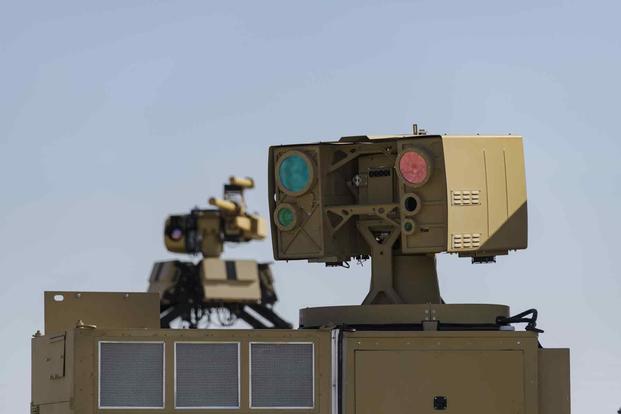
The U.S. military used a laser-based counter-drone system Thursday Feb. 26 to shoot down what it described as a “seemingly threatening” unmanned aircraft operating near the U.S.-Mexico border. Lawmakers later confirmed the drone belonged to U.S. Customs and Border Protection (CBP), raising concerns about coordination among federal agencies.
The incident occurred near Fort Hancock, Texas, roughly 50 miles southeast of El Paso. Following the engagement, the Federal Aviation Administration (FAA) temporarily restricted additional airspace in the area. Under federal rules, the military must formally notify the FAA whenever it deploys counter-unmanned aircraft systems (C-UAS) within domestic airspace.
It marked the second time in two weeks that an anti-drone laser system was used in the region. In the earlier incident near Fort Bliss, CBP deployed a similar system without striking any aircraft. That event prompted the FAA to shut down El Paso International Airport and surrounding airspace for several hours, disrupting commercial flights. The latest closure was smaller and did not affect scheduled airline operations.
In a joint statement, the FAA, CBP and the Pentagon acknowledged that the military “employed counter-unmanned aircraft system authorities to mitigate a seemingly threatening unmanned aerial system operating within military airspace.” Officials said the action occurred far from populated areas and commercial flight paths and was part of broader efforts to address drone threats along the southern border.
Several Democratic lawmakers on the House Transportation and Infrastructure and Homeland Security committees criticized the incident, saying it reflected gaps in interagency communication. They also accused the administration of failing to advance bipartisan legislation aimed at improving coordination and training for drone operators across federal agencies.
The event has renewed scrutiny over how agencies share information when deploying emerging air defense technologies in U.S. airspace. A separate anti-drone deployment earlier this month exposed similar coordination challenges and led to temporary flight cancellations in El Paso.
Drone threats along the border continue to grow, with officials reporting tens of thousands of unmanned aircraft detected near sensitive areas in recent months. Law enforcement agencies have recently been granted expanded authority to disable rogue drones, provided operators receive proper training.
However, aviation safety experts warn that the use of lasers, jamming systems and other counter-drone technologies inside domestic airspace must be carefully managed to avoid unintended consequences for commercial and civilian aviation.
Calls for an independent investigation are mounting as lawmakers seek clearer protocols to prevent future friendly-fire incidents involving U.S. government aircraft.
Related News: https://airguide.info/category/air-travel-business/defense-military/, https://airguide.info/category/air-travel-business/business-aviation/
Sources: AirGuide Business airguide.info, bing.com, www.yahoo.com