
Venezuelan Airlines Resume Flights After US Security Alert

Venezuelan airlines have begun restoring limited flight operations following a brief nationwide shutdown triggered by heightened security concerns after reported US action involving Venezuela on January 3. Aviation regulators in both the United States and Europe have issued advisories urging caution for operators flying in or near Venezuelan airspace.
The Federal Aviation Administration (FAA) and the European Union Aviation Safety Agency (EASA) warned airlines of a potentially hazardous operating environment after events on January 3 that led to the temporary suspension of air traffic. Venezuelan carriers resumed limited domestic services on January 5, according to ADS-B flight-tracking data.
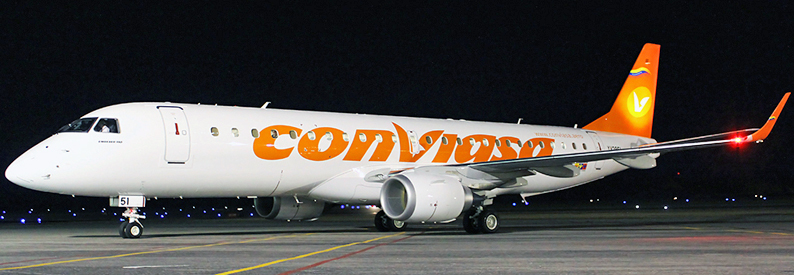
Following a complete halt of all flight operations on January 3 and 4, several local airlines—including Rutaca Airlines, Venezolana, Conviasa, Avior Airlines, and Laser Airlines—restarted domestic flights on the morning of January 5. International services, however, remain largely suspended.
Conviasa’s Airbus A340-600, registered as YV3535, was observed departing Moscow Vnukovo Airport en route back to Venezuela at the time of publication, suggesting limited long-haul repositioning activity. No other international passenger services to or from Venezuela were immediately visible in tracking data.
Initially, the US government imposed a broad restriction on January 3 that barred all US-registered aircraft from operating not only in Venezuelan airspace but also over Puerto Rico, Curaçao, and the western portion of the Piarco Flight Information Region, which covers much of the Lesser Antilles. The sweeping ban was lifted in less than 24 hours, creating significant disruption for airlines during the peak New Year holiday travel period as carriers scrambled to reposition aircraft and rebook passengers.
On January 4, the FAA replaced the temporary ban with a series of security Notice to Air Missions (NOTAMs). These advisories warn operators of a “potentially hazardous situation” in the airspaces of Venezuela, Curaçao, Piarco, and Puerto Rico. While the NOTAMs stop short of prohibiting flights, they recommend heightened caution and are currently valid on a provisional basis through February 2.
EASA also issued a Conflict Zone Information Bulletin (CZIB) for Venezuela on January 3. The bulletin advises European operators to avoid flying to the country due to elevated risk levels. Although not legally binding, CZIBs typically influence airline operational decisions and insurance assessments.
The disruption followed reports of US action involving Venezuela and the extrajudicial rendition of sitting president Nicolás Maduro, developments that sharply increased geopolitical uncertainty in the region. Venezuelan authorities have not issued detailed public guidance on the resumption of international services.
As of January 5, Venezuela’s aviation system remains in a fragile recovery phase. Domestic flights are gradually returning, but international connectivity continues to face uncertainty as airlines assess regulatory guidance, security risks, and insurance implications. Further schedule normalisation is expected to depend on how long the advisories remain in place and whether regional stability improves in the coming weeks.
Related News: https://airguide.info/category/air-travel-business/airline-finance/, https://airguide.info/category/air-travel-business/travel-health-security/
Sources: AirGuide Business airguide.info, bing.com, ch-aviation.com