
White House Backtracks on Trump Threat to Decertify Canadian Aircraft

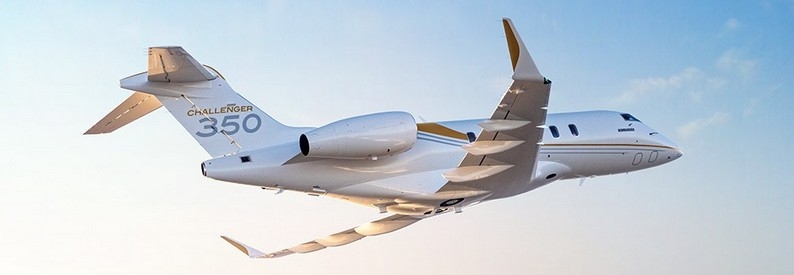
The White House has been forced to scale back President Donald Trump’s threat to “decertify” Canadian-made aircraft after warnings that such a move would ground thousands of airplanes across the United States and disrupt both commercial and military aviation.
The controversy erupted after a post by Donald Trump on Truth Social, in which he criticized Canadian aviation authorities for delays in certifying several new business jets produced by Gulfstream Aerospace. Trump accused Canada of unfairly blocking approval of the Gulfstream G500, G600, G700, and G800, and threatened sweeping retaliation.
In his post, Trump said the United States would decertify Bombardier business jets from the Global family, along with all aircraft manufactured in Canada, until Gulfstream aircraft were fully certified. He also threatened to impose a 50% tariff on any Canadian-made aircraft sold into the United States if the situation was not “immediately corrected.”
The statement triggered alarm across the aviation sector. Canadian-built aircraft are deeply embedded in the US aviation system, particularly regional air service. Bombardier produces the CRJ regional jet series, which is widely used by US airlines to provide feeder services for major carriers including American Airlines, Delta Air Lines, and United Airlines. Bombardier’s defense unit also supplies the US Air Force with military-configured Global jets, designated E-11A, which provide critical airborne communications capabilities.
Within hours, the White House moved to clarify Trump’s remarks, stating that any decertification would not apply to aircraft already in service. The partial reversal followed internal recognition that a blanket decertification would effectively ground large portions of the US regional airline fleet and disrupt military operations. It remains unclear whether the clarification extends to Bombardier Global business jets currently operating in the United States.
Trump’s tariff threat also raised concerns within government circles. While framed as a penalty on Canada, tariffs are paid by buyers, meaning US customers would shoulder the cost. This includes the Department of Defense, which is seeking to acquire 11 customized Bombardier Global 6500 aircraft for its High Accuracy Detection and Exploitation System program.
Bombardier responded by confirming it was in contact with the Canadian government and emphasizing its substantial US footprint. The company noted that it employs more than 3,000 people across nine US facilities and supports thousands of additional jobs through its supplier network. It added that its aircraft and operations are fully certified to standards set by the Federal Aviation Administration.
Certification delays cited by Trump stem from Transport Canada’s decision to conduct its own reviews of Gulfstream aircraft rather than relying solely on FAA and European approvals. The approach reflects a shift in regulatory philosophy following past certification controversies, including the Boeing 737 Max crisis.
Any actual suspension of aircraft certification would ultimately fall under FAA authority. Aviation experts note that decertification has historically been tied to safety issues, not trade disputes, leaving the practical and legal basis of Trump’s threat highly uncertain.
Related News: https://airguide.info/?s=FAA, https://airguide.info/?s=Bombardier
Sources: AirGuide Business airguide.info, bing.com, reuters.com