
Why Airlines Are Scrapping Nearly New Airbus A320 Jets

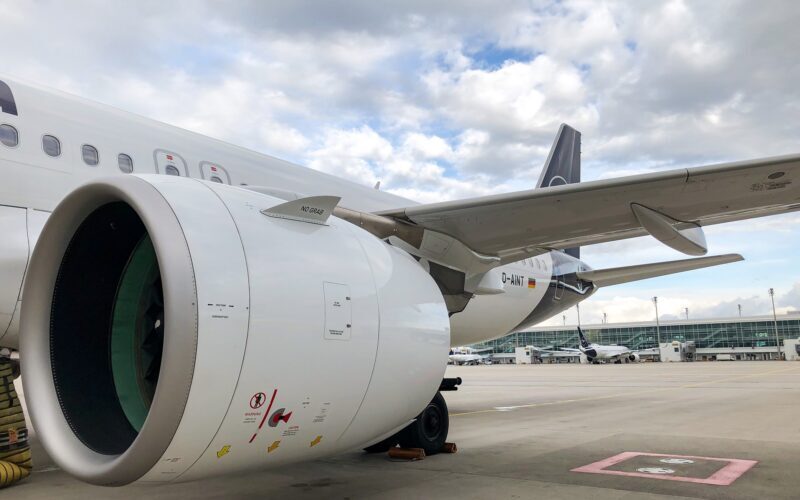
Airlines around the world are facing an acute shortage of Airbus A320 and A321 aircraft, yet a growing number of nearly new jets—some only six years old—are being stripped for parts and effectively scrapped. This contradiction is emerging at the very moment when carriers urgently need more A320-family aircraft, Airbus is increasing production rates, and leasing companies are struggling to keep fleets in service.
The unexpected reason: in today’s constrained supply chain, the Pratt & Whitney’s PW1100G engines on certain A320neo aircraft are worth far more than the aircraft itself.
Airbus A320neo Engine Crisis
The driving force behind this unusual trend is the ongoing crisis involving Pratt & Whitney’s PW1100G-JM geared turbofan engines, which power a large portion of the Airbus A320neo family. A manufacturing defect—specifically, contaminated powdered metal used in the production of high-pressure turbine discs—has triggered one of the most disruptive engine reliability problems in modern aviation.
The contamination came from microscopic particles shed from machining tools during manufacturing. Because these flaws are almost impossible to detect, thousands of turbine discs produced between late 2015 and 2021 may have compromised structural integrity.
The PW1100G-JM, Pratt & Whitney’s geared turbofan engine designed for the Airbus A320neo family, is central to the grounding and scrapping crisis affecting airlines worldwide. Celebrated at launch for its fuel efficiency, lower noise levels, and innovative geared-fan architecture, the engine promised double-digit reductions in fuel burn and operating costs. However, a critical manufacturing flaw involving contaminated powdered metal used in high-pressure turbine components has severely disrupted the fleet.
The defect, affecting thousands of engines produced over several years, requires extensive inspections, part replacements, and months-long shop visits that far exceed industry repair capacity. As a result, airlines have been forced to ground significant portions of their A320neo fleets, and the value of serviceable PW1100G engines has skyrocketed. The engine’s innovative design remains sound, but the materials issue has exposed the vulnerability of cutting-edge aerospace manufacturing and created one of the most far-reaching reliability challenges modern commercial aviation has seen.
Initial estimates suggested PW110G-JM 1,200 engines were affected. Later assessments placed the number closer to 3,000, including units produced as recently as 2023. The “JM” suffix indicates that this engine is built through the International Aero Engines (IAE) partnership, Pratt & Whitney, MTU Aero Engines, and Japanese Aero Engine Corporation (JAEC). Pratt & Whitney confirmed that approximately 1,200 PW1100G-JM engines initially fell within the affected production window (late 2015–early 2021).
The impact has been severe. Each affected engine must be removed, disassembled, inspected, and often rebuilt. While the repair work itself may take about 50 days, aircraft typically remain grounded for 250 to 300 days due to limited shop capacity and shortages of replacement parts.
A Warning Sign From Older V2500 Engines
The crisis echoes an earlier incident involving a legacy engine. In 2021, an IAE V2500—the predecessor engine used on earlier A320 models—suffered a catastrophic turbine disc failure during takeoff. Debris traveled more than 700 meters. Investigators later found material defects strikingly similar to those identified in the newer PW1100G engines.
The IAE V2500, long considered one of the most reliable engines powering earlier-generation Airbus A320 family aircraft, became an unexpected precursor to the current crisis. In 2021, a V2500 suffered a rare but serious high-pressure turbine disc failure during takeoff, sending fragments more than 700 meters from the runway. While the incident did not lead to a global grounding, the subsequent investigation uncovered metallurgical issues in the turbine disc similar in nature to those later found in the PW1100G geared turbofan.
The failure highlighted potential vulnerabilities in powdered-metal manufacturing processes and served as an early warning sign that engine components produced during certain periods might carry hidden defects. Although the V2500 fleet remains largely dependable, this incident helped accelerate scrutiny of the newer GTF engines and contributed to the wider recognition of a systemic materials problem affecting thousands of powerplants across the A320neo fleet.
While the V2500 incident alone did not trigger a global grounding, it revealed deeper concerns about metallurgical consistency that regulators could not dismiss.
A Global Bottleneck in Engine Repairs
Once the full scale of the contamination became clear, the aviation industry faced a repair bottleneck unprecedented in scope. Only a limited number of certified overhaul shops worldwide can perform deep inspections and repairs on the GTF engines, and these facilities were already near capacity before the crisis.
Pratt & Whitney has since doubled manufacturing capacity for replacement components and increased repair throughput by roughly 50%. Yet demand still far exceeds supply. Airlines have been forced to ground dozens of A320neos at a time while rotating engines across their fleets in an attempt to keep as many aircraft flying as possible.
Why Nearly New A320s Are Being Scrapped
With replacement engines scarce, the market value of functioning PW1100G engines has soared. A single cleared, serviceable engine can be leased for up to $200,000 per month—or more. Suddenly, the engines mounted on a grounded six-year-old A320neo can be worth far more than the aircraft itself.
For leasing companies, the decision is straightforward: Is it more profitable to lease a whole aircraft—or to remove the engines and lease them individually?
In many cases, parting out the aircraft generates higher and faster returns. Preparing a stored aircraft for a new operator requires repainting, interior modifications, software adjustments, and compliance updates—costs that can run into the millions. Leasing engines, by contrast, produces immediate revenue and avoids costly downtime.
This is why aircraft as young as six years old are being stripped at facilities in places like Valencia, Spain. The airframes are not worthless—they simply cannot compete with the value of the engines in today’s constrained market.
Global Impact on Airlines
The PW1100G crisis has impacted airlines in North America, Europe, India, and Latin America. Some carriers have grounded 30 to 35 percent of their A320neo fleets. Spirit Airlines in the United States, as well as several Indian airlines, have faced major operational disruptions.
Meanwhile, CFM International—the manufacturer of the competing LEAP-1A engine—must ramp up production faster than ever to meet demand. Although CFM has experienced far fewer issues than Pratt & Whitney, it is still under enormous pressure to increase output for new aircraft and spare engines.
Should Airlines Diversify Their Engine Choices?
Some industry analysts now question whether airlines should diversify engine orders between CFM and Pratt & Whitney to reduce risk. In practice, this is difficult. Engine selections are locked in years before delivery and tied to long-term service agreements, financial structures, and performance guarantees. Changing course mid-order could cost more than temporarily grounding aircraft.
Even airlines still awaiting A320neo deliveries generally cannot alter their engine choice at this stage.
A Fragile Aerospace Supply Chain & What Lies Ahead
The premature dismantling of nearly new A320-family aircraft underscores how vulnerable aviation supply chains are to disruptions. A single materials defect has cascaded into shortages affecting aircraft production, repair networks, operating fleets, and global seat capacity.
Pratt & Whitney’s parent company has already recorded over $3 billion in charges related to the crisis. Total costs, including airline compensation and operational impacts, may reach $6–7 billion.
For comparison, developing the entire GTF engine family cost approximately $10 billion.
Repair capacity is slowly improving, and new manufacturing processes are being introduced to prevent future contamination issues. Ultimately, grounded aircraft will return to service. But in the near term, the global fleet remains short of engines, and the mismatch between supply and demand persists.
Until the shortage eases, even relatively young A320s may continue to be worth more as parts than as flying aircraft.
Related News: https://airguide.info/?s=Pratt+Whitney, https://airguide.info/?s=Airbus+A320
Sources: AirGuide Business airguide.info, bing.com, prattwhitney.com, airbus.com